

Annual Report 2024
Department of Psycho-Oncology Service
Asao Ogawa, Masanori Enokido, Yusei Iwata, Daisuke Fujisawa
Introduction
The aim of the Department of Psycho-Oncology Service is to develop mind-centered interventions to restore, maintain, and improve the quality of life of patients and their families throughout cancer treatment, including the end-of-life period. Our service has focused on developing effective interventions for delirium, dementia, and depression in cancer patients as well as on determining the mechanism underlying the relationship between cancer and the mind through a combination of neuropsychiatric, psychosocial, and behavioral sciences.
In particluar, increases in the number of individuals diagnosed with cancer each year, due in large part to the growth of the aging population, as well as improving survival rates have resulted in an ever-increasing number of elderly cancer patients with deteriorating cognitive functions. Therefore, we conduct research on the development and validation of geriatric assessments such as Mini-Cog and comprehensive geriatric assessment (CGA), etc., and the evaluation of the effectiveness of multidisciplinary interventions among hospitalized cancer patients with delirium or cognitive function disorders, including mild cognitive impairment.
The Team and What We Do
The Department of Psycho-Oncology Service is composed of three attending psychiatrists and four clinical psychologists. The clinical activity includes psychiatric consultation involving comprehensive assessment and addressing the psychiatric problems of cancer patients. Patients are either self-referred or referred by their oncologist in charge. The consultation data are shown in Tables 1 and 2. Psychiatric diagnosis is based on the DSM-5 (Diagnostic and Statistical Manual of Mental Disorders, 5th edition) criteria. Consultation data also include individuals who are family members of cancer patients.
Table 1. Supportive care team consultation data (n=1,850; April 2024 to March 2025)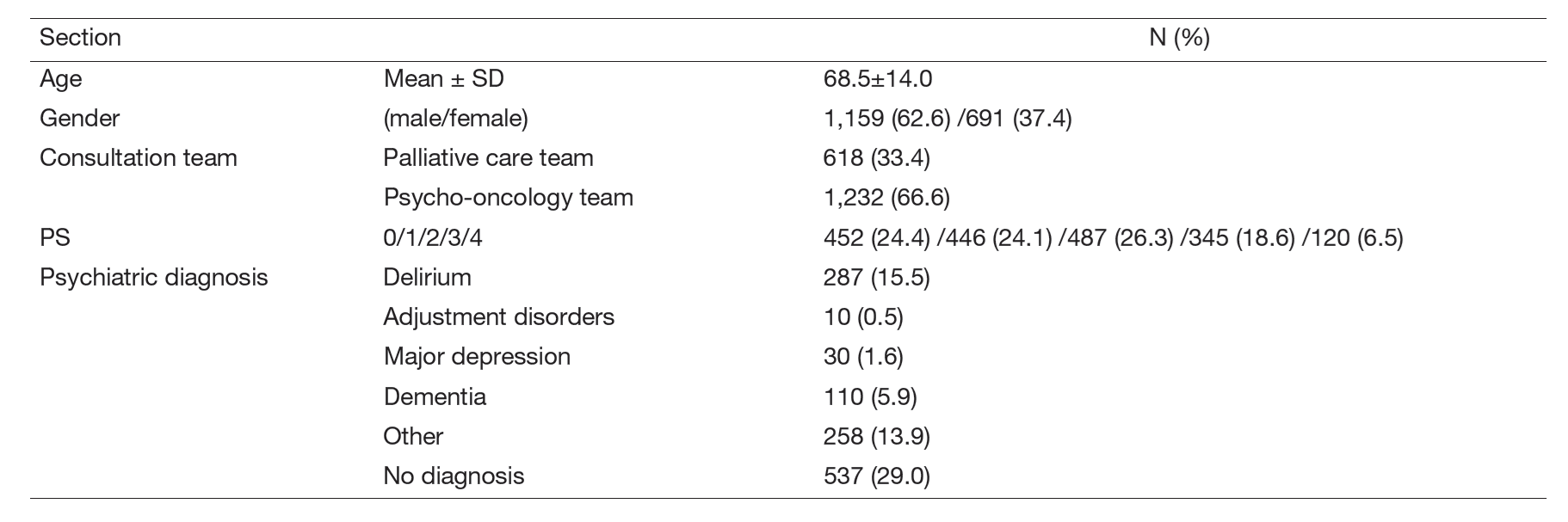
Table 2. Psycho-oncology outpatient consultation data (n=536; April 2024 to March 2025)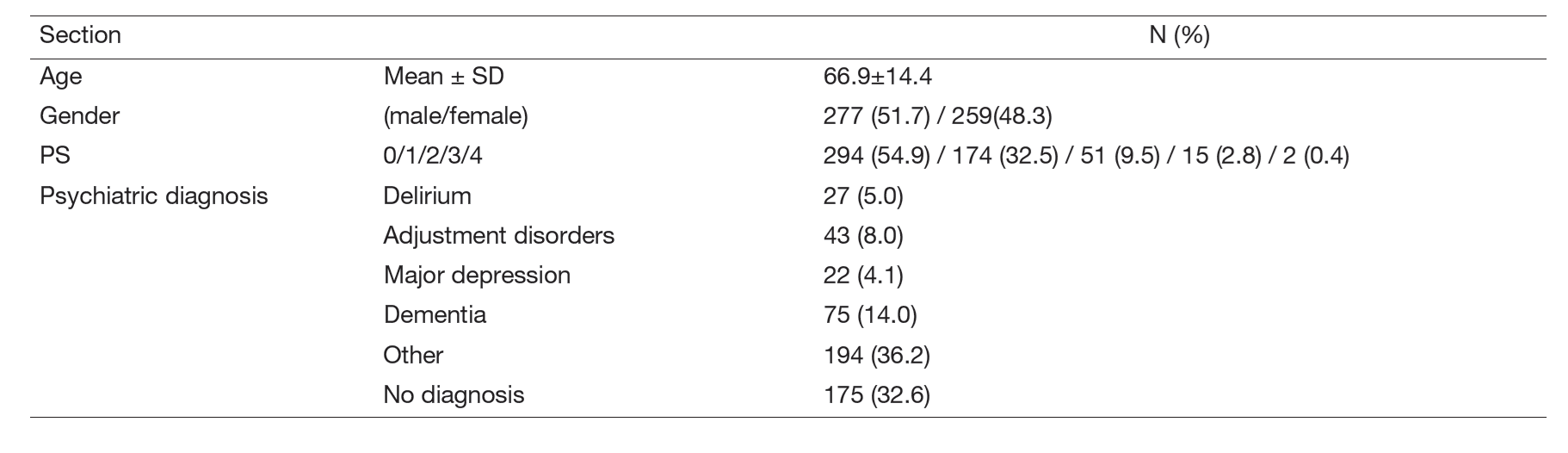
A conference with the Supportive Care Team is held every Wednesday, and a multicenter joint clinical teleconference involving six cancer center hospitals and three university hospitals is held every Thursday.
Research Activities
1. Development of a delirium care support system utilizing artificial intelligence that proposes prevention and early detection of delirium
With the growing number of elderly people, the prevalence of delirium with physical and mental conditions in acute care hospitals has increased. The purpose of this study is to disseminate appropriate delirium care in acute care hospitals in Japan through the development of an assist system that utilizes artificial intelligence for physical care and delirium care for inpatients.
2. Multicenter, double-blind, placebo-controlled, randomized controlled study for efficacy and safety of ramelteon in preventing postoperative delirium in delirium high-risk cancer patients (Research and Development grants for cancer at the Japan Agency for Medical Research and Development)
Delirium is common among the elderly and is associated with worsening surgical outcomes, decreased quality of life, and mortality, but no standard pharmacological preventive measures have been established. We have initiated a multicenter, double-blind, placebo-controlled trial to verify the delirium preventive effect and safety of the melatonin agonist ramelteon in elderly people undergoing cancer surgery.