

Annual Report 2024
Section of Medical Assistant Management
Yuji Nishizawa,
25 staff and 22 part-time staff
Departments: Outpatient scheduling desk, Hospitalization preparation center, Medical certificate drafting, Disease name registration, Radiology reception, Endoscopy center reception, Rehabilitation reception, Physiological examination reception and some outpatient receptions
Introduction
Collaboration among physicians and medical staff to implement task shifting and task sharing is essential for promoting work style reform. As one of the main task-shift destinations, we have the section of Medical Assistant Management (MA) which support physicians with administrative tasks. The MA section was established in 2021, enabling deployment across the entire organization. Currently, we have built a system that seamlessly supports the entire patient journey, from outpatient care to inpatient treatment, contributing to part of Patient Flow Management (PFM). The MA section also carries out task-shifted duties such as drafting medical certificates and registering diagnoses. Although the responsibilities of the MA section are diverse, work sharing across the team has enabled the establishment of an efficient operational structure.
The Team and What We Do
A professional team leading task shifting and serving as the heart of the hospital’s hospitality.
Research Activities
As the core of PFM, we established a centralized outpatient reservation counter and built a system to centrally manage delegated tasks such as entering appointment schedules and diagnostic test orders on behalf of physicians. By shifting the time-consuming scheduling tasks from physicians during outpatient consultations, we have worked to promote task shifting for physicians and reduce patient waiting times. Along with the increasing use of the outpatient reservation counter (Figure 1), the proportion of patients with outpatient waiting times exceeding one hour — a key clinical indicator of the hospital — has been decreasing (Figure 2). We will continue to promote operational efficiency and task shifting to reduce patient waiting times.
Figure 1. Number of cases handled at Outpatient scheduling desk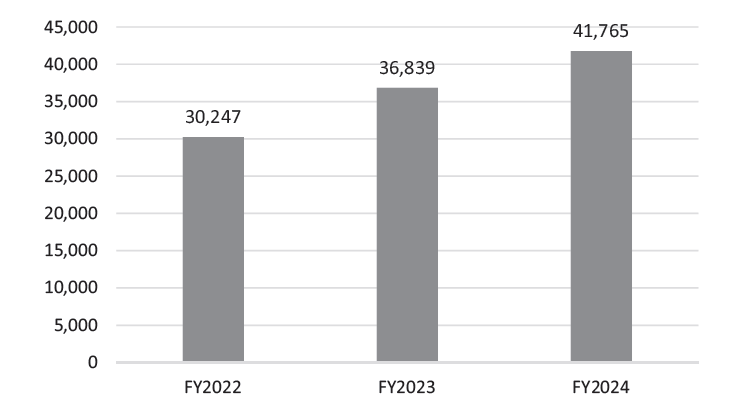
Figure 2. Outpatient Waiting Time Over One Hour (%)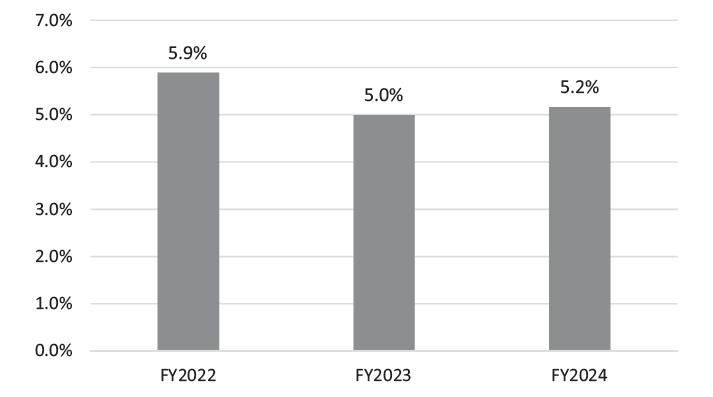
Education
We have developed our own medical assistant training program that incorporates lectures essential for cancer-specialty hospitals and made it available to other departments as well. A certificate of completion is issued after 32 hours of lectures and a competency assessment. In addition, to establish a structure in which staff members of the MA section can work across different departments, we have implemented a job rotation system.
Future Prospects
By continuously fostering and educating personnel while improving operational efficiency, it is possible to further advance PFM. Introducing communication tools among staff and utilizing AI to analyze patient care status on an hourly basis will enable more efficient staff allocation. In addition, implementing Robotic Process Automation for diagnosis registration will accelerate workflows, and we are planning to expand our operations, including enhancing medical certificate preparation services.