

Annual Report 2024
Surgical Center
Manabu Hashimoto, Nao Katagiri
Introduction
The 13 operation rooms at the Surgical Center are used by 12 surgical departments. As our main strategy is less-invasive and function-preserving surgery, we conduct more thoracoscopic and laparoscopic surgeries than other hospitals.
Indications for robot-assisted surgery have been expanding year by year. We increase medical safety through good communication between anesthesiologists, nurses, doctors and other medical staff members.
The Team and What We Do
The total number of surgical procedures performed this fiscal year was 4,926 (Table 1). The hospital currently operates three da Vinci robotic systems, which are utilized across multiple specialties, including Urology, Gastric Surgery, Esophageal Surgery, Thoracic Surgery, Gynecology, Hepato-Biliary-Pancreatic Surgery, Head and Neck Surgery, and Colorectal Surgery. The number of robot-assisted procedures reached 947, marking a record high (Table 2). These procedures also include the use of the ANSUR surgical support robot developed at our institution, which continues to contribute to safe surgical outcomes.
Table 1. Total number of surgical procedures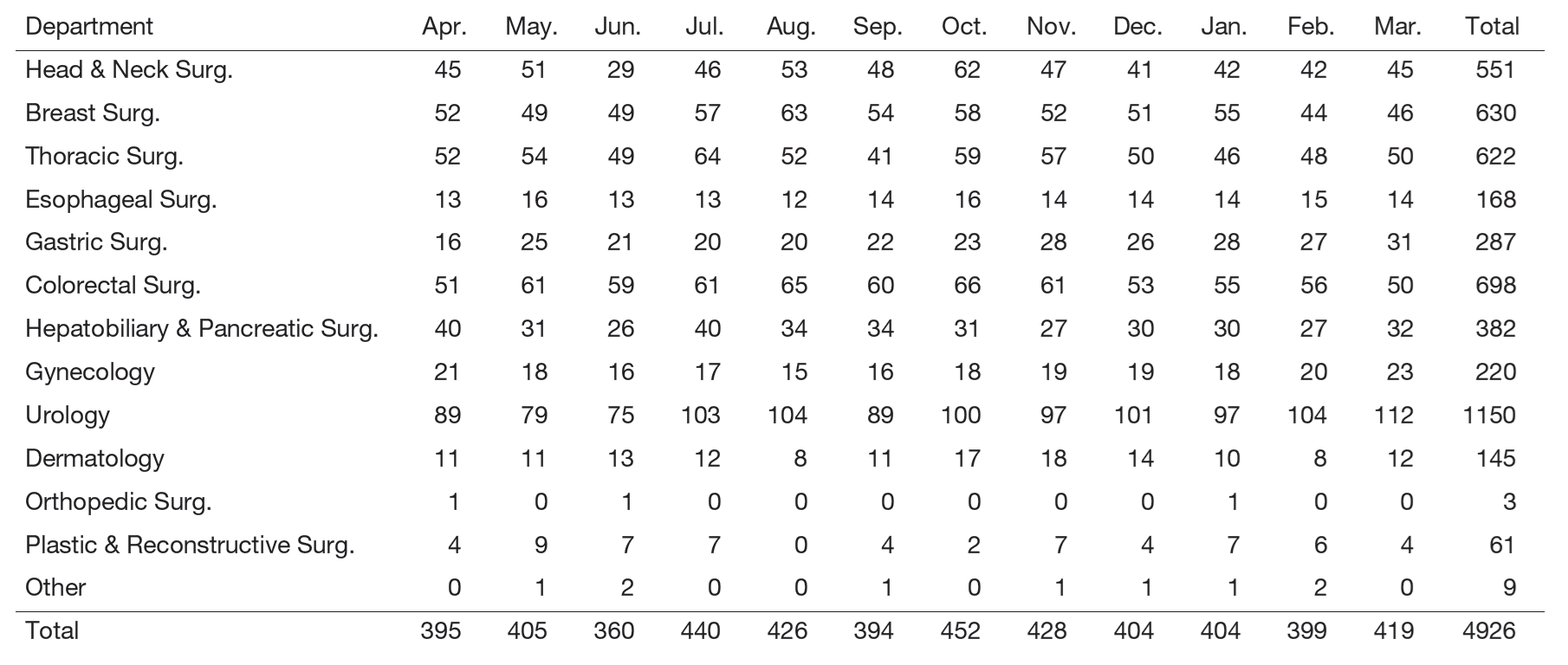
Table 2. Number of robot-assisted procedures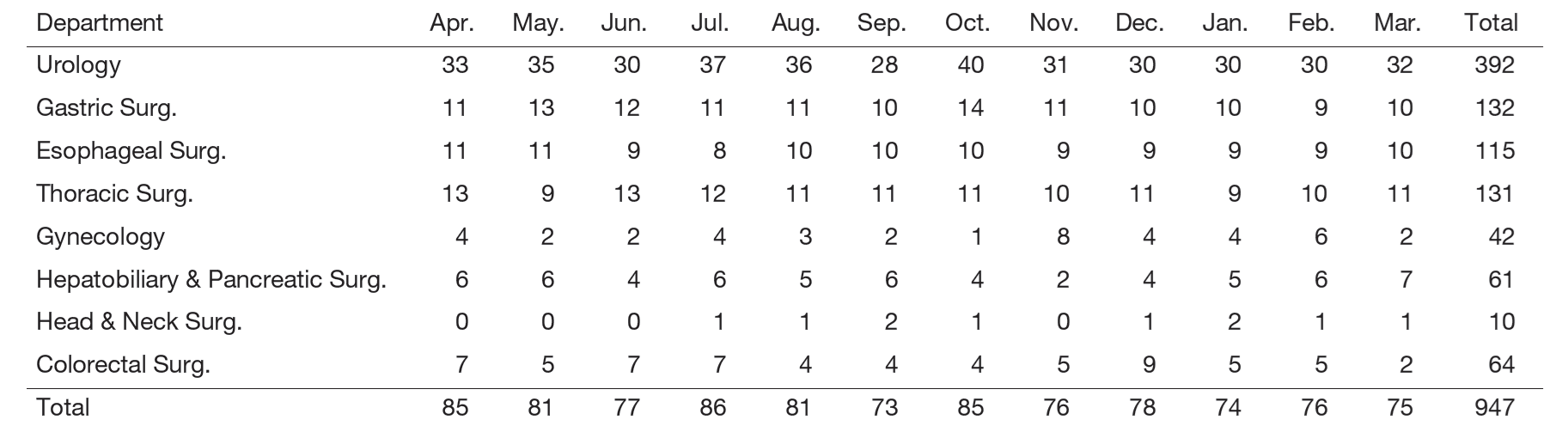
The Department of Gastric Surgery serves as a model center for demonstrating da Vinci surgery in physician training, attracting many visitors from various facilities. A number of surgeries for rectal cancer are performed in combination with transanal Total Mesorectal Excision (taTME) in the Department of Colorectal Surgery. In addition, we actively provide other facilities with education programs, including live seminars conducted by connecting the operating room to the conference room. We are also working to establish a system for introducing new surgical methods and highly complex medical technologies.
Education
A cross-departmental education system is used in a training program targeting surgical residents. In particular, training for endoscopic surgery is offered in a systematic and efficient manner. We also actively invite visitors and residents from other countries to offer technical guidance.
We have been collaborating with manufacturers to hold workshops, including training for novice nurses to address the increased use of robotic surgeries. Furthermore, as part of continuous education aimed at developing in all staff members the skills necessary to manage robotic surgeries, all operating room nurses are encouraged to take online training courses and to receive a certificate of completion. Specific action should be taken in the event of bleeding during da Vinci surgery. Therefore, we conduct "conversion" simulation training to help nurses complete an advanced cardiac life support (ACLS) course qualifying them to take appropriate action in response to sudden changes in their patients' condition. This year we have continued to strengthen our partnership with the ICU to boost the number of surgeries and further the development of operating room nursing. We have ongoing training in ICU operations for operating room nurses, as well as training in operating room operation for ICU nurses.
Future Prospects
The number of surgeries and surgical clinical trials, as well as the introduction of new, highly complex medical technologies, is expected to further increase in the future. In preparation for the increased number of surgeries, we increased our number of operating rooms from 12 to 13 in 2023 to ensure efficient surgical operations.
It is important for the hospital to cooperate not only with physicians and nurses, but also with various other types of professionals, and to continue to foster the evolution of healthcare providers with a view to the next generation of treatment.