

Annual Report 2024
Surgical Center
Tetsufumi Sato, Yuko Hirose
Overview
In the operating rooms, surgical procedures were performed by 15 oncological surgical departments. From April 2024 to March 2025, a total of 5,580 operations were conducted. Of these, 5,148 procedures were managed by the Department of Anesthesiology (including 5,143 under general anesthesia) and 432 were performed under local anesthesia by individual departments (Tables 1 and 2).
The number of operations under anesthesiologist management remained nearly stable, while those under local anesthesia slightly decreased. Consequently, the overall number of surgeries showed a minor decline. However, there was a notable increase in the number of lengthy procedures and complex surgeries involving multiple departments.
Table 1. Number of operations (2024.4-2025.3)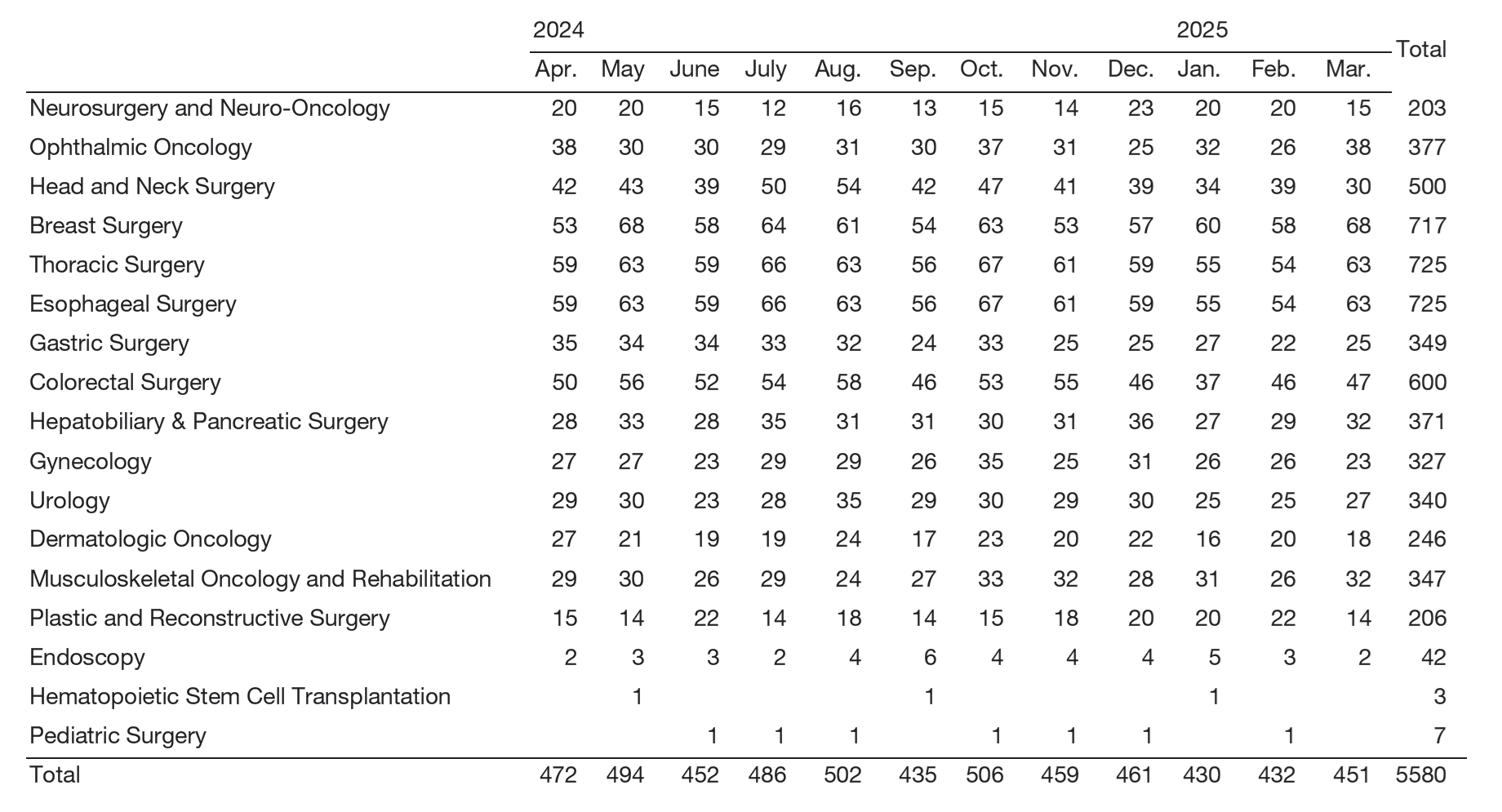
Table 2. Total number of anesthesia cases (2024.4-2025.3)
Introduction of Robotic Surgery
In FY2024, in addition to Urology, Colorectal Surgery, Esophageal Surgery, Gynecology, Gastric Surgery, Hepatobiliary and Pancreatic Surgery, and Head & Neck Surgery, the Department of Thoracic Surgery newly introduced robotic-assisted procedures. The total number of robotic surgeries was 696 (Table 3).
Table 3. Total number of Robotic Surgery (2024.4-2025.3)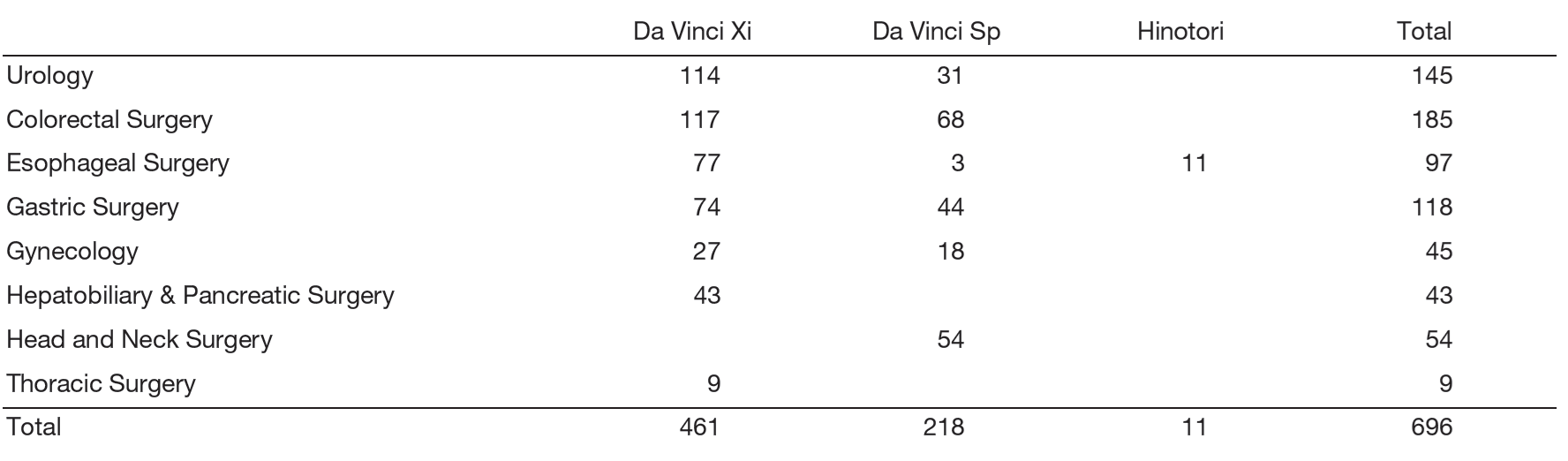
Among these, 218 procedures were performed using the single-port Da Vinci system (Sp Da Vinci), which was introduced in FY2024, and the number has been steadily increasing. Furthermore, this fiscal year marked the clinical introduction of Hinotori, a domestically developed robotic-assisted surgical system, as part of clinical research.
Trends in Surgical Practice
While minimally invasive surgeries such as robotic-assisted procedures continued to increase, highly invasive surgeries for advanced cancers and multidisciplinary combined resections involving multiple organs were also frequently performed. As a result, the average operative time showed a tendency to increase.
To ensure smooth surgical performance in such complex cases, preoperative multidisciplinary simulations were conducted as part of a comprehensive team-based approach.
Role of Clinical Engineers
In recent years, the number of laparoscopic and thoracoscopic procedures has increased. Clinical engineers were responsible for a wide range of tasks, including endoscopic tower setup, robotic system preparation, support for radiofrequency ablation in breast cancer, and assistance in neurosurgical monitoring.
Education and Training
Since FY2022, the hospital has resumed accepting international trainees. In FY2024, the number of international fellows further increased. Additionally, a large number of medical and nursing students were accepted for clinical training and education in the operating rooms.