

Center for Research Administration and Support (Cras)
Teruhiko Yoshida, Tomoko Seki
(Research Administration Section)
Nobuko Ushirozawa, Katsuya Sawadaishi, Yoshimitu Sakamoto, Shugo Nemoto, Ayako Mesawa, Tsukina Ohno, Yuichi Amanuma, Fumie Suzuki, Kiyoka Nagayama, Yuko Yamada, Sawako Nakayama, Emi Nobuhara, Chinatu Watanabe
(Research Alliance and Intellectual Property Section)
Genta Ohno, Kyoko Chiba, Ryota Kosaka, Junko Kaneko, Ayuri Bakuya
(Human Research Protection Section)
Yoko Yokota, Yayoi Ofuji, Kuniko Takahashi, Norie Enomoto, Satoko Arai, Tetsuya Ueda, Ayako Yagasaki, Sanae Kawada, Megumi Teshirogi, Soichi Shimizu, Masahiko Ozaki, Yuki Harada, Hayato Kamata, Miwa Kanehira, Yumika Yoshikawa, Takashi Matsunaga, Ai Shibata, Sayaka Yamamoto, Yoko Matsubuchi
(Biostatistics Division)
Taro Shibata, Aya Kuchiba, Junki Mizusawa, Masashi Wakabayashi, Gakuto Ogawa, Ryunosuke Machida, Ryo Sadachi, Masayuki Yokoyama, Yuki Konda, Naomi Konishi, Kohei Uemura, Akihiro Hirakawa, Shogo Nomura, Riku Kajikawa, Shogo Ando, Yuya Ishikawa, Seiichiro Yamamoto, Suga Yamagami, Yuko Minami, Shintaro Iwamoto, Nobuyuki Wakui, Ayako Murooka
(Bioethics Division)
Tsunakuni Ikka, Yoko Saito
Introduction
In the annual report each year, the whole history of the Center for Research Administration and Support (CRAS) is reviewed since its establishment on July 16, 2014. The starting members of the CRAS were approximately 160 staff, who together provided diverse functions and specialties, ranging from research fund administration, alliances with the private sector, intellectual properties, clinical research coordination and data management, monitoring and audit, biostatistics support, secretariat services for research ethics (IRB), and COI committees.
The background and purpose of the creation of the CRAS was explained by Dr. Tomomitsu Hotta, the President of the National Cancer Center (NCC), in NCC News 2014 Vol. 5 No. 3 (in Japanese). Briefly, since its foundation in 1962, the NCC has added several new segments and organizations to evolve as a comprehensive cancer center. Because each segment needed its own research infrastructure, support activities in the NCC had become fragmented and scattered with the possibility of gaps and redundancies. Dr. Hotta launched extensive NCC-wide discussion with the help of the Strategic Planning Bureau and assembled the "NCC New Vision" in FY 2014, in which he proposed integration and communication for various research support functions in the NCC. The CRAS was created in response to the FY 2014 Vision.
In FY 2015, the NCC Hospital (NCCH) and the NCC Hospital East (NCCHE) were certified as Core Clinical Research Hospitals under the Medical Care Act in August and September, respectively. As a result, the governance of the Research Coordination Division, Research Promotion Division and Regulatory Science Section of the CRAS moved to the Clinical Research Support Offices, which belong to the common departments of each hospital. In January 2017, these divisions and section were officially separated from the CRAS in the NCC organization.
Another major reformation of the CRAS in FY 2017 was the establishment of the Bioethics Division by expanding the former Bioethics Section. The Clinical Trials Act was promulgated on April 14, 2017, and came into effect on April 1, 2018. Despite the general scarcity of human resources in the specialty field, the NCC has been endowed with strong staff, who have been contributing to work not just inside the NCC but also all over Japan with regard to research ethics-related issues including the implementation of the Clinical Trial Act.
In FY 2018, the concept of the RA (research administrator) system in the NCC was discussed in the CRAS and updated in the NCC headquarters.
In FY 2019, under the leadership of the new Chief of Bioethics Division, several important discussions and pieces of rule-making were done in collaboration with the researchers and staff in both campuses of the NCC. For instance, liaison and research manager staff have been assigned in each section of the NCC to facilitate communication between researchers and the research ethics review committee and build a solid base for the research ethics in the research groups.
In FY 2020, the CRAS continued to work in response to directions by the government on research governance, such as the establishment of a basic policy for the data sharing in collaboration with the JH (Japan Health Research Promotion Bureau), an organization officially established in FY 2020 to promote alliance among the 6 National Centers. The CRAS led the coordination of various sections on both campuses to get a more precise and comprehensive picture of the research-related funding and revenue of the NCC.
In FY 2021, the CRAS has made several renovations to support the researchers, such as the introduction of electronic grant application systems, to alleviate their administrative burden in the research activities. Another revision of the CRAS organization scheme was moving the Human Research Protection Section from the Bioethics Division to the Research Administration Division, thereby demarcating the research review function and research support services such as research ethics consultation.
In FY 2022, the CRAS has further evolved electronic grant application system to the integrated database of the public grants and the NCC Research & Development fund, so that the NCC can review and analyze its research portfolio and potentials. The total research funds awarded to the NCC researchers, both from public grants, contract and collaborative research and revenues from intellectual properties, have been increasing and reached over 20 billion yen. The remarkable performance of the NCC is of course attributable primarily to the high research capabilities and motivation of the NCC researchers, the role played by the Research Alliance and Intellectual Property Section has been also crucial, for its excellent strategic advice and support. Along with the avid collaboration with the industrial sectors, institutional COI policy has been drafted in FY 2022 by COI Management Section.
In FY 2023, following the approval of the "Comprehensive Innovation Strategy 2023" by the Cabinet on June 9, 2023, which emphasized the promotion of immediate open access to research outputs, such as publications and their key data, the center began considering the implementation of the "Institutional Repository". Additionally, based on the "Initiatives for Strengthening the Functions of National Research and Development Agencies" (as agreed upon by related ministries on March 29, 2024), discussions were initiated on specific measures to enhance their research capabilities and connect research results to practical applications in society. These measures include "efforts to secure and nurture excellent and diverse human resource," "the promotion of joint research and intellectual property management to facilitate social implementation," and "ensuring and thoroughly implementing research security and integrity." Furthermore, the center considered introducing the PI Salary System (enforced on February 5, 2024), which would allow the payment of personnel costs for principal investigators and others from direct competitive research funds. This system aims to improve researchers' performance and strengthen the research capabilities of institutions. Collaborative research with industrial sectors has been growing to surpass the figures in FY2022 both in the number of the projects, 743, and the amount of the funds received, 5 billion yen. Moreover, one of the NCC-certified ventures has gone public for the first time, initiating its IPO (Initial Public Offering).
In FY 2024, in order to comply with the 'National Policy on Promoting Open Access to Publicly Funded Scholarly Publications and Scientific Data', decided by the Integrated Innovation Strategy Promotion Council on 16 February 2024, we have made concrete progress in the construction of an institutional repository. In light of the current situation in which ensuring and thorough research security and integrity is required, we also examined organization of The Security Export Control in the NCC. The number of collaborative research has been steadily expanding, with 820 projects and research funds of 4.4 billion Japanese Yen, which is 62 times the size of the figure in 2010, just after the NCC was incorporated. Additionally, we established regulations to enable the NCC to acquire and hold shares in venture companies and acquired shares in certified ventures in accordance with the Act on Revitalization of Science and Technology, and Developing Innovation. Regarding the maintenance of rules, the "Conflict of Interest (COI) Management Regulations" and the "COI Committee Operating Regulations" were amended.
(Future Prospects)
FY 2024 marks the 10th year of the CRAS's launch. In light of changes in the environment surrounding the NCC, we have made efforts to address research security, research integrity, and the trend toward open science. In addition, the results of its efforts in industry-academia collaboration and intellectual property management have become even more evident. The NCC aims to maximize its research and social impact based on the deep understanding of the strength and opportunity of both campuses, which together cover basic, clinical, public health and social sciences as a comprehensive cancer center. As an integral part of the NCC research scheme, CRAS will also envision the next era. However, the core concept of the CRAS may stay unchanged to contribute to the NCC mission by promoting organic unity of the NCC as a whole and the CRAS aims to contribute to bringing the various sections together in the NCC. Furthermore, in order to respond to the trend of demands for strengthening the functions of national research and development agencies, we aim to actively contribute to the implementation of new functions required of the NCC, such as the establishment of a security export control system, in addition to smoothly carrying out our existing operations and strengthening the organizational structure.
1. Research Administration Division
1) Research Administration Section
The Research Administration Section is a central office in charge of various administrative work related to research funding including application and reporting. The major external funding sources of the NCC are competitive grants from the government and government-supported agencies, such as the Ministry of Health, Labour and Welfare (MHLW), the Japan Society for the Promotion of Science (JSPS), and the Japan Agency for Medical Research and Development (AMED).
- This section also serves as an administrative office for the NCC Research and Development Fund, which is provided directly from the government to the NCC for fulfillment of its mission as the national core institute of cancer control. This section organized seminars regarding research funding and its rules to prevent financial misconduct or research misconduct.
- The Guidelines for Management and Audit of Public Research Funds at Research Institutions were updated by the Ministry of Education, Culture, Sports, Science and Technology (MEXT) in February 2021 and adopted by the MHLW in March 2021. This section serves as a compliance promotion office of the Guidelines and has established a new system for research fund administration, which is fully compatible with the new Guidelines.
- Based on revision by MEXT of the guidelines for managing and auditing public research funds at research institutions, we formulated an action plan to prevent the improper use of research funds. As part of our enlightenment activities, we distributed newsletters and disseminated items related to the prevention of improper use of research funds. (The items were reported by the compliance promotion officers of each department to each department's members, in order to raise their awareness related to the prevention of financial misconduct.)
- In order to comply with the 'National Policy on Promoting Open Access to Publicly Funded Scholarly Publications and Scientific Data' formulated at the Integrated Innovation Strategy Promotion Council on 16 February 2024, we examined the construction of an institutional repository.
- In accordance with the measures for ensuring and enforcing research security and integrity outlined in the 'Initiatives for Strengthening the Functions of National Research and Development Corporations' (Joint Statement by Relevant Ministries and Agencies, 29 March 2024), we examined organization of The Security Export Control in the NCC.
Future Prospects
The Section will keep playing a central role in establishing, maintaining and improving the research management system in NCC that complies with the government Guidelines for the Management and Audit of Public Research Funds at Research Institutions (MEXT and MHLW). Additionally, the Section's new focus will include the promotion of the "Open Science", which is a global initiative and has been adopted by the "Comprehensive Innovation Strategy 2023" in Japan (June 9, 2023), and "Research Security and Integrity" and the "Institutional Repository." based on the "Initiatives for Strengthening the Functions of National Research and Development Agencies" (March 29, 2024).
Specifically, Institutional Repository and its national network aim to advance the integration of diverse and scattered information such as research funds, research achievements, research outcomes, and personnel all over Japan. The system will serve as a crucial steppingstone to create an environment capable of collecting and analyzing information, thereby enhancing the information infrastructure and analytical capabilities that contribute to the strategic analysis and planning in a wide variety of research and development fields, including cancer research, and their integrated areas.
2) Research Alliance and Intellectual Property Section
We build bridges between NCC research and industries by collective management of the collaborative research alliance and the utilization of intellectual property (IP) arising therefrom.
1. Alliance with the private sector
We have supported NCC's alliance activities, including but not limited to establishing worldwide comprehensive collaborative partnerships with major pharmaceutical companies and academic institutions. Currently, 11 comprehensive collaborative alliances are active between the NCC and domestic/overseas industry partners (Figure 1). We have also been supporting a nationwide genomic screening project (SCRUM-Japan "Cancer Genome Screening Project for Individualized Medicine in Japan") led by the NCC as first challenge in Japan. Nationwide medical institutions and 23 domestic/overseas pharmaceutical companies have joined the Project (Table 1). The collaborative research and research funds that we manage have been increasing year by year. In 2024, the number of collaborative research reached 820, and the amount of research funds reached 4.4 billion Japanese yen (Figure 2). This is 62 times the size of the figure in 2010, just after the NCC was incorporated.
2. Intellectual property management
We encourage NCC researchers to license out IP derived from their research at early stages to partner companies who can work together towards realization of their research results. Our IP strategy enables us to reduce costs in patent prosecution and to expedite commercialization of our research results, eventually availing the receipt of monetary consideration from industry. On the other hand, for the IP NCC substantially bears the cost, we constantly review the value of IP and dismiss those which could not find sponsors within a certain period. By allocating NCC's financial resources to IP with commercial values, NCC has been successful in sustaining positive outcome of IP management for years (Figure 3).
3. Certified ventures
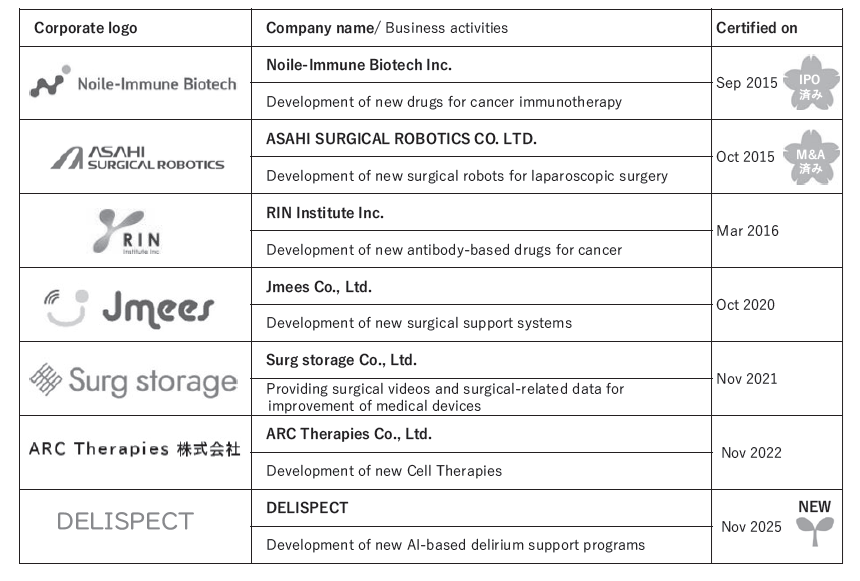
We certify "NCC-originated venture companies" that try to perform application and commercialization of IP and research results originating in the NCC. We have certified seven NCC-originated venture companies so far (Table 2). In 2023, the first listed company was born from these certified ventures. In 2024, we established regulations to enable NCC to acquire and hold shares in venture companies and acquired shares in certified ventures in accordance with the Act on the Promotion of the Creation of Science, Technology and Innovation.
Human resource development and education
We host educational seminars of essential IP knowledge to NCC faculties at least twice a year. Our staff are encouraged to participate in seminars and conferences to update their knowledge on IP laws, regulations, and guidelines as well as scientific technologies, all of which are necessary to promote academic-industrial alliances. From time to time, we consult with experts, such as lawyers and patent attorneys, to solve problems and to gain practical experiences.
Future Prospects
Under the vision of "NCC is committed to delivering the best possible treatment and prevention to all people through collaboration with society", we will keep supporting the creation of effective and innovative collaborative research frameworks which develop to fruitful research partnership. We will continue to play key roles in assisting the NCC making decisions on its IP management.
Figure 1. Comprehensive Research Alliance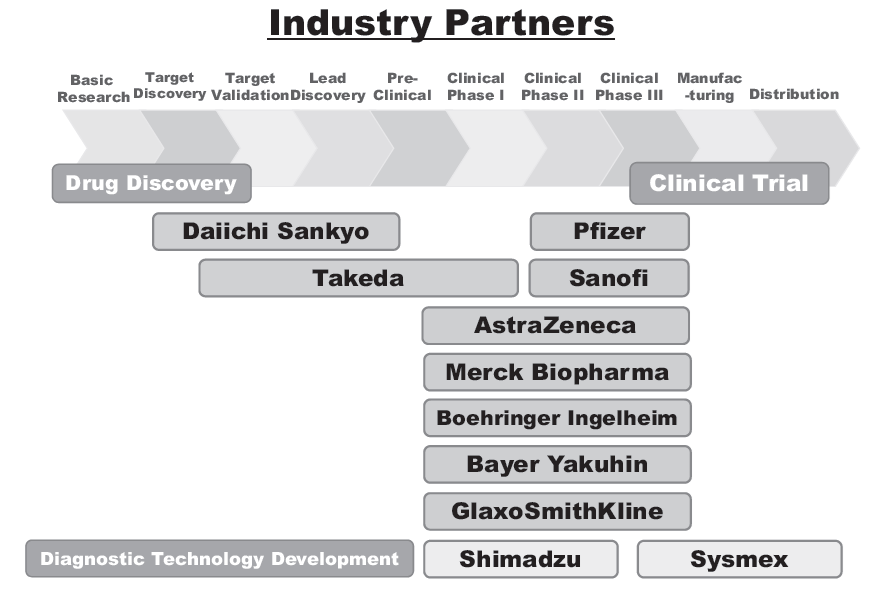
Table 1. Participant Companies to SCRUM-Japan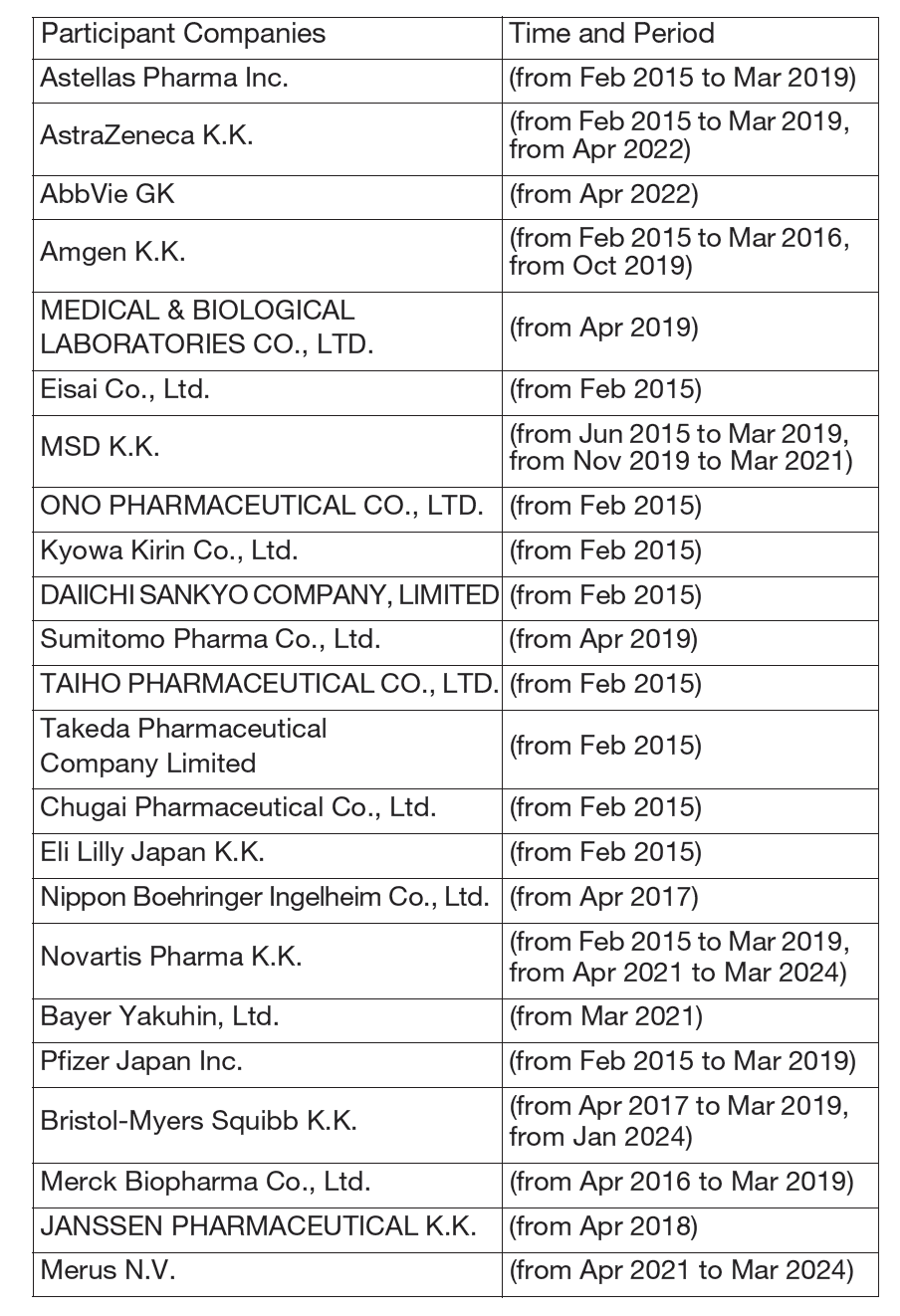
Figure 2. Collaborative Research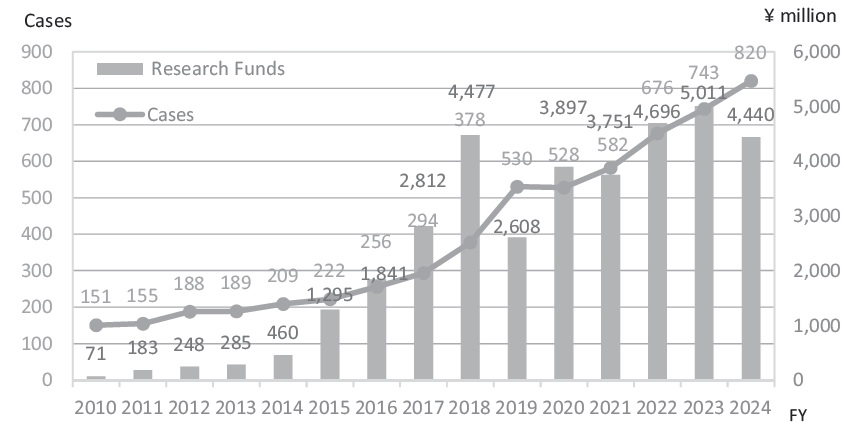
Figure 3. Intellectual Property Income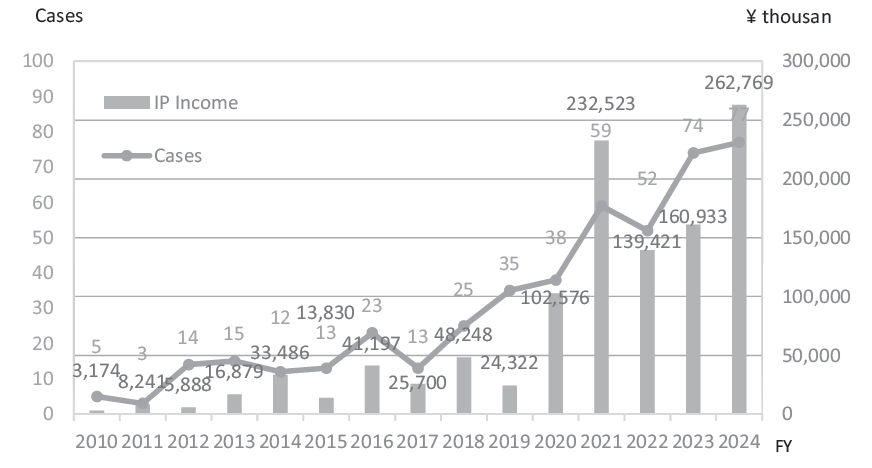
3) Human Research Protection Section
The Human Research Protection Section oversees the administrative operations of various human subject research review committees and handles administrative tasks related to the responsibilities of the head of the research institution regarding ethics review.
Furthermore, the Institutional Review Board/ Independent Committee (IRB/IEC), in accordance with the Act on Securing Quality, Efficacy and Safety of Products Including Pharmaceuticals and Medical Devices, performs committee secretariat functions in collaboration with the Clinical Trial Secretariat of the Hospital and the Hospital East.
The Research Ethics Review Committee reviewed and reported on a total of 3,024 cases during the year, with 251 cases involving new research plans.
In fiscal year 2024, 2,360 ongoing research projects were subject to review management, of which 382 were reviewed collectively.
In addition, by automating part of the research information disclosure process published on the official website, we have improved operational efficiency while preventing information disclosure omissions and enabling faster disclosure.
Research Activities
At the academic conference, we presented a poster on our center's response to research that does not comply with the Ethical Guidelines for Medical and Biological Research Involving Human Subjects.
Future Prospects
In accordance with the revised Act on the Protection of Personal Information, we will smoothly, promptly, and appropriately perform the secretariat duties for various research ethics review committees involving human subjects, as well as administrative tasks related to the ethics review responsibilities of research institution heads.
2. Biostatistics Division
Biostatistics Division has a role of responsibility in formulating research hypothesis, study design, analysis, interpretation and publication, especially in JCOG and EPOC clinical trials and the investigator-initiated clinical trials which are led by investigators in the NCC Hospitals. We have also committed to establishing an infrastructure to support the clinical trials in the NCC Hospitals. Furthermore, we have been actively involved in collaborative relationships with the NCC Research Institute and the Institute of Cancer Control.
Furthermore, we have provided biostatistical consultation and expertise, which supports NCC investigators working on basic, translational, clinical and epidemiological researches. We offered advice to about 131 problems for which biostatistical consultation was requested from April 2023 to March 2024. In addition, we conducted six bioinformatics-biostatistics joint consultations on five topics in collaboration with bioinformatics experts.
In statistical research, two poster presentations were given at the International Society for Clinical Biostatistics and ASA Biopharmaceutical Section Regulatory-Industry Statistics Workshop. In addition, one clinical trial related research paper as the first author was accepted in Cureus, and oral presentations were given at the Japan Society of Clinical Oncology, Japan Lung Cancer Society and Japanese Society of Medical Oncology.
Education
We provided 13 introductory Biostatistics lectures for investigators in the NCC to learn and review the elementary aspects of Biostatistics. We had a cumulative total of 577 participants. In addition, we hosted 3 Biostatistics lectures to cover advanced and important biostatistical side of various application fields and a total of 138 investigators participated. The lectures are open to any applicants from outside institutes.
In addition, we provided an internship program for 12 graduate students from the graduate schools of the University of Tokyo (the Biostatistics and bioinformatics course, Graduate School of Interdisciplinary Information Studies).
In response to the activity of career development and education for biostatisticians by the Japan Health Research Promotion Bureau (JH), the newly established "Young Biostatisticians NC Collaboration Training Pilot Project" was started from fiscal year 2022. Through this initiative, we have admitted one junior biostatisticians from the National Center for Child Health and Development, one associate professor from Hoshi University, and one graduate student from Institute of Science Tokyo, into on-the-job training (OJT) program on a weekly basis.
In terms of educational outreach to clinical research practitioners nationwide, we have continued to develop and operate the e-learning platform ICRweb (Introduction to Clinical Research: https://www.icrweb.jp), releasing a total of 81 new contents. The user base has grown from 199,022 to 217,152, and we expanded the total number of contracted institutions to 154. This expansion ensured stable operations independent of research funding. Graduation certificates were issued for 38,790 completions, representing the widespread provision of clinical research education to a diverse range of individuals engaged in clinical research.
Furthermore, as part of the Asian Clinical Trials Network initiative (ATLAS Project) by the National Cancer Center Hospital, an English version of ICRweb was introduced, offering learning opportunities in clinical research in English to not only domestic but also international practitioners. We further enriched the 6NC Common Educational Platform with lectures not only on clinical research but also animal experimentation and data science, contributing to comprehensive education.
Future Prospects
The NCC has a critical role for providing clinical service, education, conducting research and making policy recommendation/proposal, which are all required to make a decision on the basis of solid and scientific evidence from reliable data and information. In addition, new challenges have emerged, such as the use of Real World Data for new drug application and clinical evaluation for implementation of medical device with artificial intelligence. To adapt flexibly to these developments, the Biostatistics Division is expanding its independent and collaborative research across a range of areas. Recently, we have made a particular effort to build effective relationships with the investigators at the NCC Research Institute and the Institute of Cancer Control. Collaboration on such a wide range of areas have motivated to develop statistical methods to get deeper insight into evidence and public health impact. We are also working on promoting cooperative framework with outside experts in statistics/biostatistics. We are opening up a new methodological research area in which a mathematical approach will serve as a solid basis. We involved in research utilizing large-scale real-world data repositories such as the Center for Cancer Genomics and Advanced Therapeutics (C-CAT) and the MASTER KEY Project. Moving forward, we aim to disseminate findings related to clinical data and the development of infrastructure for this data utilization.
3. Bioethics Division
The Bioethics Division provides education and training on issues related to research ethics and conflicts of interest (COI), mainly in relation to the protection of human subjects, including ethical guidelines for life sciences and medical research involving human subjects, the Pharmaceutical Machine Law, the Clinical Research Law, laws related to regenerative medicine and the Personal Information Protection Law, and the operation of various ethical review committees for human subject research. The following are some of the activities.
- The National Cancer Centre's "Training for new employees" (delivered online in April).
Training on research ethics at the National Cancer Centre's 'Clinical Research Seminar' (27 May, 24 July, 25 September and 25 March in FY2023). - Training for Ethical Review Committee and Clinical Trial Review Committee members in 2024 (27 July 2024).
In addition to the provision of these education and training programmes, the Bioethics and Medical Law Section and the COI Management Section, each of which is located in this division, carry out the following activities.
1. Bioethics and Healthcare Law Section
The Office of Bioethics and Medical Law provides research ethics consultation services to researchers, research assistants and research ethics review committee members at various stages from the planning of research to its publication. Unlike ethics review, research ethics consultation is non-binding advice and deals with ethical issues beyond regulatory compliance.
FY2024 results: 90 consultations were received annually. 23 were from researchers and others at the Tsukiji Campus and 67 were from researchers and others at the Kashiwa Campus. 73 cases to ethical guidelines and 47 other cases (including duplicates).
Future Prospects
We will continue to provide and enhance our research ethics consultation services. Other research support activities related to the Centre as a whole, in addition to consultations with individual researchers, will be continued as necessary.
We have a mission to support the resolution of ELSI issues in research implementation through consultation services and education and training activities for the entire center and all researchers, and to further develop the systems necessary to achieve the overall mission of the National Cancer Centre while responding to changes in various rules and social conditions.
2. COI management section
Our section serves as the COI management committee secretariat to manage NCC researchers' COI and to respond to inquiries. The subjects of COI management are physician-initiated clinical trials, some of the clinical research conducted under the Ethical Guidelines for Life Sciences and Medical Research Involving Human Subjects. We recommend that the researchers who are involved in the research project funded by national ministries or authorities disclose their COI despite being subject to COI review. Furthermore, we manage the COI of the members of the research ethics committee and institutional review board. We also handle the COI management required by the Clinical Trials Act.
FY2024 results: The COI management committee reviewed 102 physician-initiated clinical trials (1,963 researchers) and 166 clinical research conducted under the Ethical Guidelines for Life Sciences and Medical Research Involving Human Subjects (1,606 researchers). Furthermore, we verified 142 COI disclosure forms following the Clinical Trials Act. We have promoted awareness regarding the creation of conflict of interest management templates for the Clinical Research Act within the system. Effective October 1, 2024, the "Conflict of Interest (COI) Management Regulations" and the "COI Committee Operating Regulations" were amended.
Future Prospects
We continue to improve the structure of COI review and management.
Our mission is to address conflicts of interest in the conduct of research through conflict of interest management and education and training activities for researchers throughout the Centre, and we aim to further develop the systems necessary to achieve the overall mission of the National Cancer Centre while responding to changes in various rules and social conditions.